
Introduction
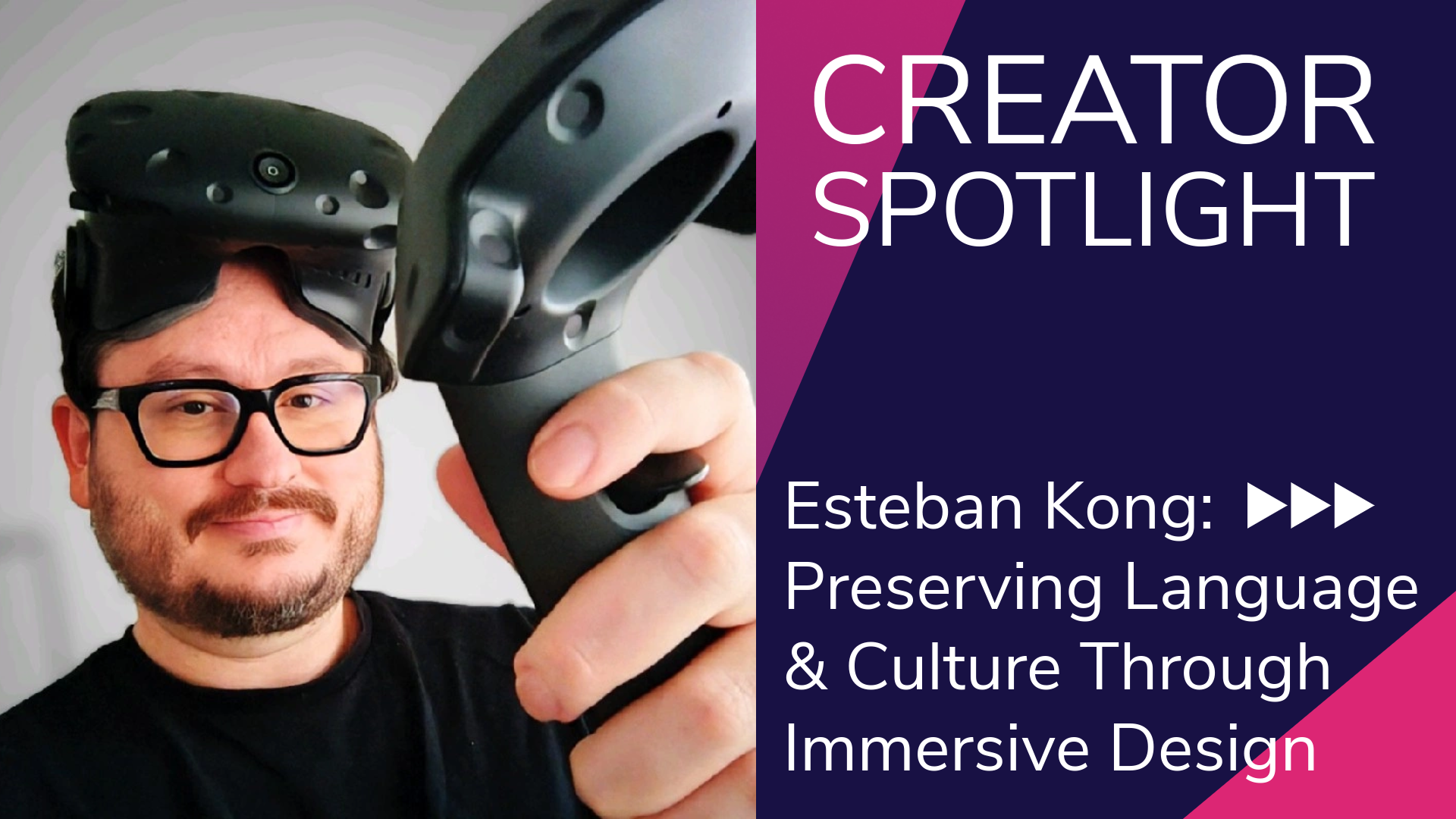
Esteban Kong is exploring how immersive learning and virtual reality can reshape the way people engage with language and culture. As an XR designer and visual designer working with the Tibetan Costa Rican Cultural Association, his work focuses on bringing Tibetan language and cultural heritage to a wider audience via interactive, meaningful learning experiences.
Rather than treating language as something to memorize, Esteban is designing experiences that allow learners to see, hear, and physically engage with it. His approach blends storytelling, cultural research, and hands-on interaction to create something that feels both educational and personal.
We are trying to create an educational tool that will be able to be a blueprint for any other writing systems and languages around the world.
Designing a new kind of language learning experience
At the center of Esteban’s work is a VR-based application focused on teaching the Tibetan alphabet through calligraphy. The goal is to make learning more engaging by connecting movement, sound, and visual form.
Instead of relying only on reading or listening, learners step into an environment where they actively participate in the writing process.
The experience is designed to:
- Introduce the Tibetan alphabet through guided interaction
- Combine pronunciation with physical writing practice
- Reinforce memory through repetition and movement
- Create a more engaging alternative to traditional language tools
Learning inside a culturally grounded environment
A key part of the experience is the setting itself. Esteban places learners in a carefully designed virtual world inspired by Tibetan architecture and the Himalayan landscape.
This environment is not just visual. It provides context and meaning, helping learners connect language with culture.
Inside the experience, learners explore a culturally sensitive virtual environment while they learn the history and structure of the Tibetan alphabet. They then get to practice their calligraphy with guided instruction from a culturally appropriate character.
Building a blueprint for global language learning
While the current focus is the Tibetan language, Esteban’s long-term vision extends much further. He sees this project as a foundation that can be adapted for other languages and writing systems.
His big idea is to create a flexible model for immersive language learning that can be reused across cultures, especially those that are often underrepresented in mainstream technology.
Once you get your hand actually writing that letter, you will be able to connect that to memory.
Why immersive learning matters for cultural preservation
Esteban highlights an important challenge in today’s digital landscape. Many technologies are designed around dominant languages and perspectives, leaving smaller or less widely spoken languages behind.
By using virtual reality, he aims to create space for those voices and traditions.
His work emphasizes:
- Cultural accuracy through research and collaboration
- Representation of underrepresented languages
- Learning experiences that respect context and meaning
- Tools that can scale across institutions and communities
Making immersive design more accessible
One of Esteban’s key takeaways is that immersive creation becomes much more approachable with the right tools and support. Instead of focusing only on complex development, designers can concentrate on the experience itself by using software like Zoe for Unity.
He encourages educators and creators to take the first step into VR, experiment regularly, and share their work with others. Build confidence through iteration and collaboration, and don’t forget to test your experiences with real learners- the sooner the better!
Looking ahead
Esteban Kong’s work demonstrates how virtual reality can transform language learning into something active, immersive, and culturally meaningful. By combining design, storytelling, and technology, he is helping create new pathways for learners to connect with language in deeper ways.
If you are exploring how immersive learning and virtual reality can support language education, cultural preservation, or interactive design, Zoe can help you bring your ideas to life. Let’s work together to create engaging VR experiences that make learning more memorable, accessible, and impactful.
Check out Zoe for Unity here, or join the Zoe Creator Program to learn alongside educators who are shaping the future of learning through creativity and exploration.