
A campus approach to immersive learning
At New Mexico State University, Jiaqi Zhang helps shape how technology supports teaching, learning, and innovation across the institution. As an Enterprise Instructional Technology Administrator, she works closely with faculty, students, and instructional designers to ensure that academic technology systems are not only reliable but also forward-looking.
Her work sits at the intersection of instructional design, virtual reality, and digital learning strategy. From supporting the LMS to exploring immersive environments, Jiaqi focuses on making technology meaningful and usable for real teaching challenges.
[With VR] We can work with the instructional designer team… build things out that exactly fits the need for our instructors and the students.
Connecting systems, people, and ideas
Jiaqi’s role covers a wide landscape of tools and services that power modern higher education. By supporting core platforms and helping instructors navigate new technologies, she helps create a foundation where experimentation with immersive learning can thrive.
Her work often involves:
- Supporting the LMS and integrated learning tools
- Advising faculty on digital teaching practices
- Helping departments explore new instructional technologies
- Connecting instructors with resources for innovation
This broad perspective allows her to see where virtual reality can complement existing workflows and enhance course design.
Building a virtual campus experience
One of the most exciting areas of Jiaqi’s work is the creation of a digital twin of the university. By recreating campus spaces in VR, her team opens new possibilities for orientation, collaboration, and remote engagement.
In these immersive environments, students and faculty can explore spaces, meet virtually, and imagine new forms of interaction that go beyond traditional video conferencing. For instructional designers, a virtual campus offers a living laboratory to test ideas about spatial learning and presence.
How VR supports instructional design
Jiaqi sees virtual reality as a powerful tool for designing learning experiences that are interactive and adaptable. Rather than simply delivering content, VR allows educators to create scenarios where learners actively engage with concepts.
Some of the ways she envisions VR supporting instructional design include:
- Creating reusable simulations that can be adapted across courses
- Supporting experiential learning through hands-on interaction
- Providing visual and spatial context for complex topics
- Encouraging collaboration between technologists and faculty
By working closely with instructional designers and technical teams, she aims to build experiences that align closely with learning objectives.
Do not just stay alone and try to figure everything out by yourself because it's a new world
Designing interactive learning scenarios
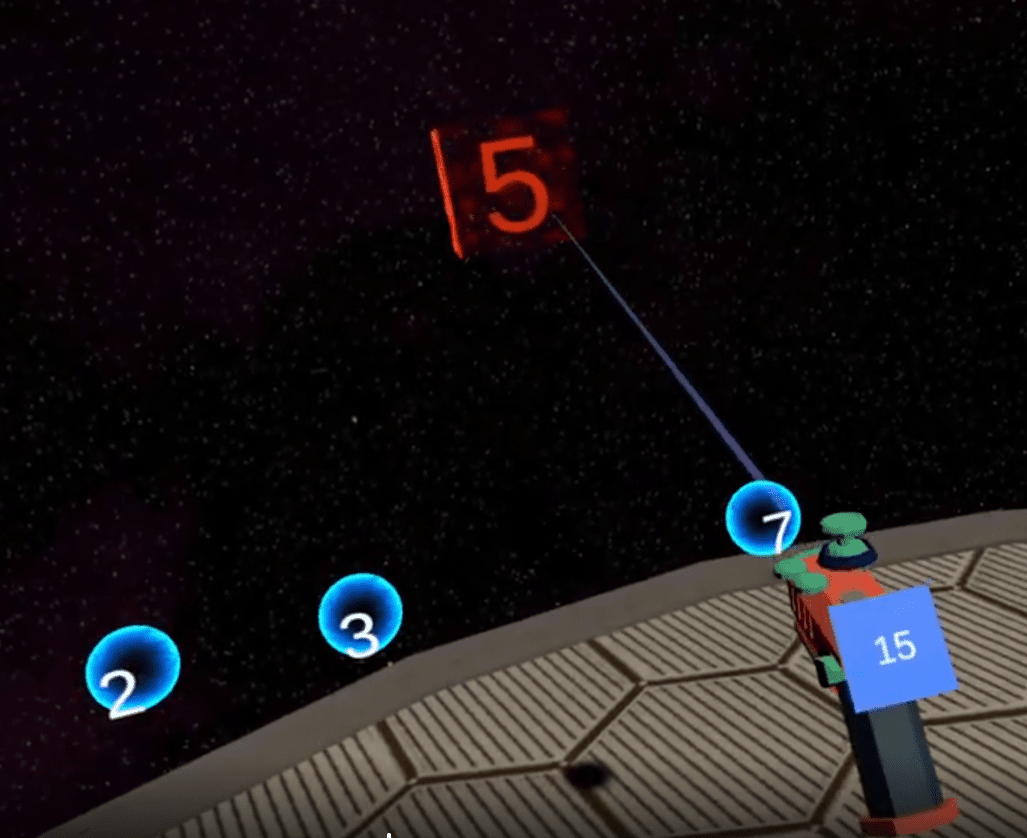
Jiaqi described a concept for a math-focused VR experience where learners apply problem-solving skills in an interactive environment. Students wake up in a virtual setting where they must use mathematical reasoning to respond to challenges, turning abstract ideas into something concrete and engaging.
The vision reflects a broader shift in education toward learning by doing, where immersive technology supports deeper understanding and motivation.
Advice for educators exploring virtual reality
- Look for partners across campus who are interested in innovation
- Start with a clear instructional goal before choosing technology
- Explore existing examples and adapt what works
- Build small pilots that can grow over time
This collaborative mindset helps reduce barriers and makes it easier for institutions to integrate immersive learning into their strategies.
Looking forward
Jiaqi’s work highlights how virtual reality can become part of a connected ecosystem that supports teaching, experimentation, and continuous improvement. By aligning instructional design with emerging technologies, she helps create opportunities for more engaging and effective learning experiences.
As universities continue to explore the potential of immersive learning, her approach shows the value of combining strong infrastructure with curiosity and collaboration.
Interested in exploring how virtual reality and immersive learning can support instructional design at your institution? Connect with the Zoe team to prototype new ideas, collaborate with faculty, and bring interactive learning experiences into your programs.
Download Zoe here, or join the Zoe Creator Program to learn alongside educators who are shaping the future of learning through creativity and exploration.